A patch panel is one of the most essential components in any structured cabling system. Its primary purpose is to serve as a centralized hub where incoming and outgoing network cables are terminated, organized, and cross-connected — enabling administrators to manage, reroute, and troubleshoot network connections without touching the permanent cable runs behind the walls. Whether deployed in enterprise data centers, commercial office buildings, or residential smart-home installations, a patch panel provides the backbone of an efficient network cabling solution.
At its core, a patch panel is a passive device — it neither amplifies nor routes signals on its own. Instead, it acts as a structured termination point, housing a row of ports (typically RJ45 keystone jacks) on the front face for patch cord connections, while the rear side accepts the permanent horizontal cable runs terminated via punch-down IDC connectors. This clean separation of permanent infrastructure and flexible front-end connections is what makes the patch panel indispensable in modern networks.
From patch panel cat6 solutions to blank modular variants, today's market offers an extensive range of products tailored to every deployment scenario. Understanding what a patch panel does — and choosing the right type — is the foundation of a well-designed, scalable network infrastructure.
Patch Panel vs Switch: Understanding the Core Difference
One of the most common points of confusion in network design is the difference between a patch panel and a network switch. While both devices live in the same rack and both terminate cables, they serve fundamentally different roles. A patch panel is a passive cable management device — it has no active electronics, no processing capability, and consumes no power. A network switch, on the other hand, is an active Layer 2 (or Layer 3) device that reads MAC addresses, manages traffic flows, and provides device-level intelligence.
The patch panel acts as the fixed, permanent termination point for structured cabling, while the switch provides the active intelligence to route data. They work together as a team: cables from wall outlets run to the patch panel; short patch cords then connect the patch panel ports to the corresponding switch ports. This arrangement means that network reconfigurations (moving a workstation from one VLAN to another, for example) only require swapping a short patch cord — not re-running cables through the building.
The chart above highlights the stark contrast between the two devices. While a switch may need to be replaced every 3–7 years as technology evolves, a quality patch panel from reputable patch panel manufacturers can serve reliably for over a decade, making it one of the best long-term investments in your cabling infrastructure. The passive nature of the patch panel also means zero power draw — an important consideration in energy-conscious data centers where every watt counts.
Core Components of a Structured Cabling System
A complete structured cabling system is not a single product but an interconnected ecosystem of components designed to work in harmony. Each structured cabling system component plays a specific role, and the performance of the whole system depends on the quality and compatibility of its parts. Below are the primary building blocks of a professional network cabling solution:
- Horizontal Cabling: Cat5e, Cat6, or Cat6A UTP/FTP cables running from the telecommunications room to each work area outlet. These are the permanent, fixed runs that form the invisible backbone behind walls and ceilings.
- Patch Panel: The termination point for horizontal cable runs. A patch panel 24 port or 48-port unit is the most common format for rack-mount deployments.
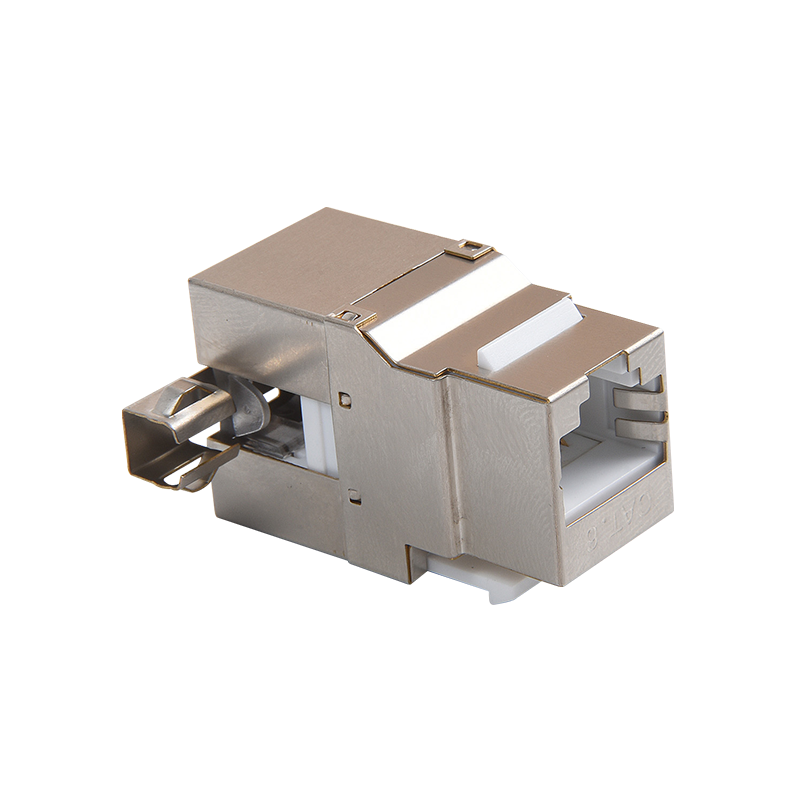
- Keystone Jacks: Modular connectors installed in faceplates at the work area end, or in blank patch panels at the rack end. A quality keystone jack cat6 module ensures reliable signal transmission up to 250 MHz.
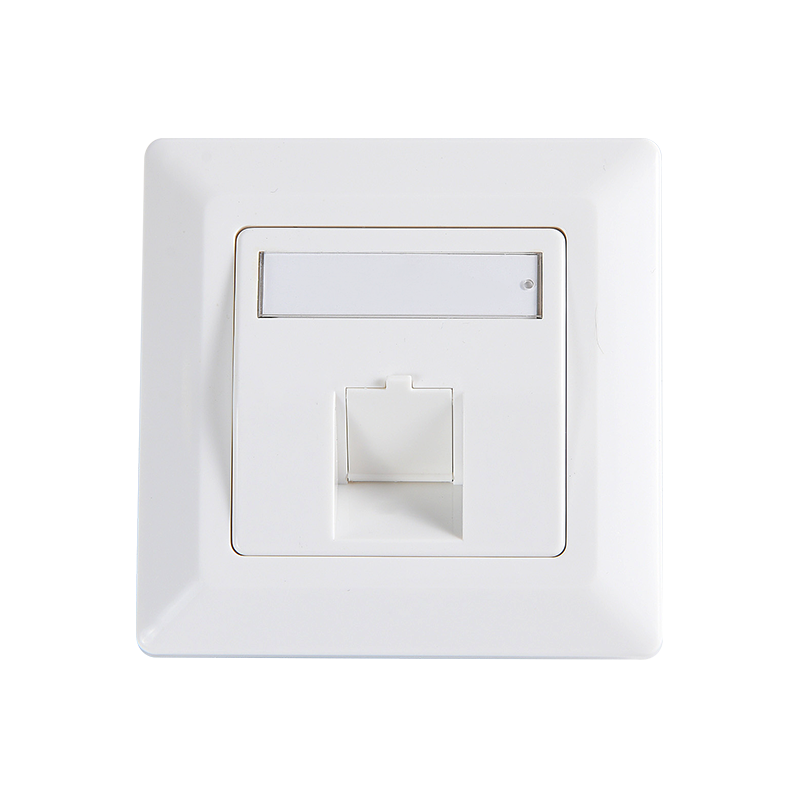
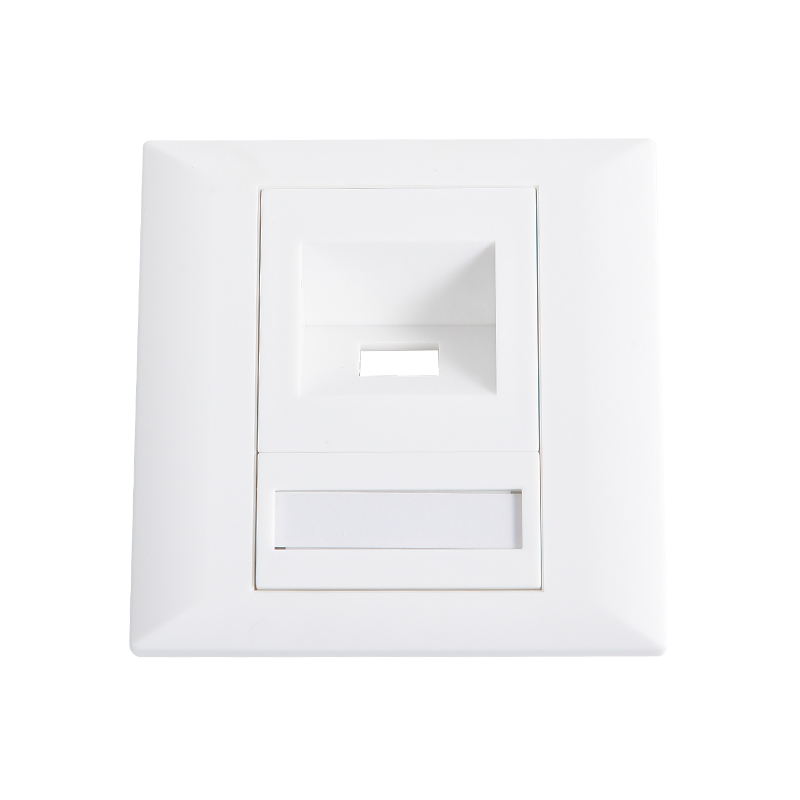
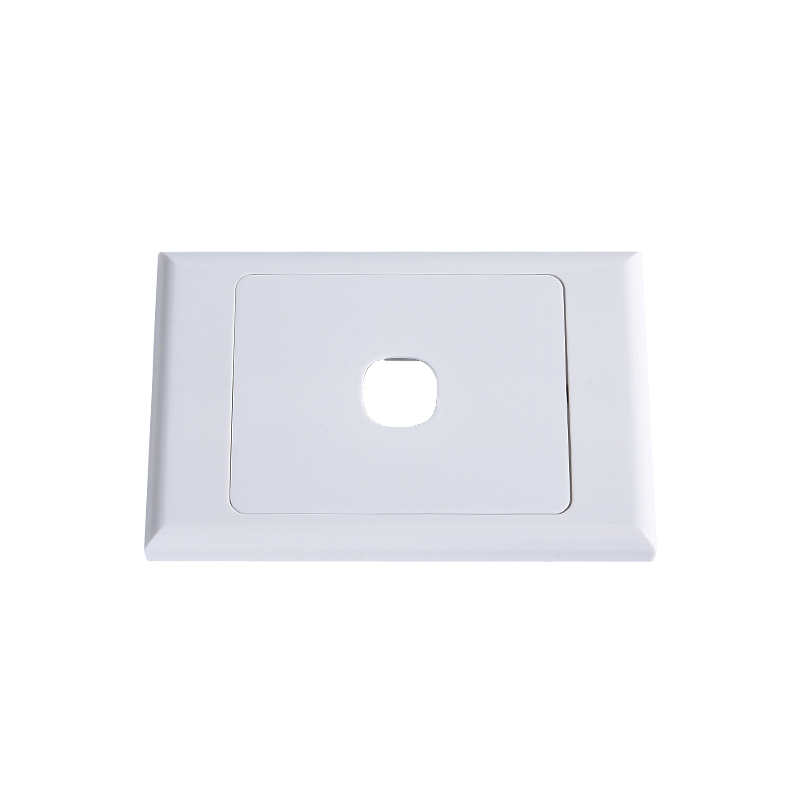
- Faceplates / Network Face Plates: Wall-mounted housings that hold keystone jacks at the work area. Available in 1-port, 2-port, 4-port, and 6-port configurations. Professional faceplate manufacturers offer flush-mount, surface-mount, and angled variants.
- Patch Cords: Short, flexible cables with RJ45 male connectors on both ends, used to connect patch panel ports to switch ports, or faceplate outlets to end devices.
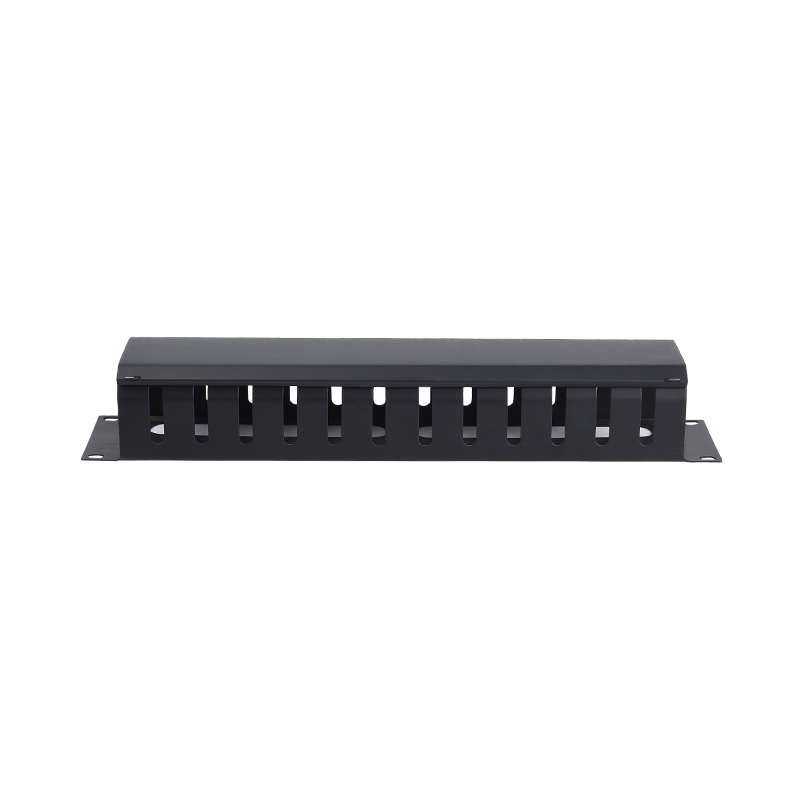
- Cable Management: Horizontal and vertical cable managers keep patch cords tidy, reduce strain, and improve airflow in the rack.
The signal flow diagram above illustrates how each component links to the next in a real structured cabling deployment. The critical design principle is the two-segment approach: a long permanent cable run (terminated via punch-down IDC at both ends) combined with short, replaceable patch cords at each end. This approach means that a single cable pull — often the most labor-intensive part of any installation — can serve the building for decades, while the flexible patch cord connections can be reconfigured in seconds.
Professional structured cabling products today support multiple cable categories within the same component range. A single product line from a quality manufacturer will span Cat5e through Cat6A, ensuring backward compatibility and a clear upgrade path as bandwidth demands grow. The termination methods — 110-type, Krone, and Dual-type IDC — further ensure compatibility with legacy tooling already in the field.
Types of Patch Panels: From Cat6 Fixed to Blank Modular
Not all patch panels are built the same. The right choice depends on your cable category, port count, mounting environment, and the degree of flexibility you need for future changes. Here is a structured breakdown of the main types available from professional patch panel manufacturers:
Fixed Patch Panels (Cat5e / Cat6 / Cat6A)
Fixed panels come with pre-installed RJ45 keystone jack ports and are the most common choice for standard deployments. A patch panel cat6 fixed unit typically supports frequencies up to 250 MHz and is suitable for Gigabit Ethernet and 2.5G/5G multi-gigabit applications. Cat6A fixed panels extend performance to 500 MHz, supporting 10 Gigabit Ethernet at up to 100 meters — the preferred choice for high-density data centers and future-proof enterprise networks. Port counts range from 8 to 96 ports per 1U or 2U rack unit.
Blank Patch Panels (Keystone Modular)
A blank patch panel is a panel chassis without pre-installed connectors. It accepts standard snap-in keystone jacks, allowing the installer to customize port types, categories, and even media (copper RJ45 alongside fiber LC or SC modules). This modularity is invaluable in environments with mixed media requirements. A patch panel 24 port blank chassis, for example, can host 24 Cat6 keystone jacks initially and later have some ports swapped to fiber optic or coax modules as requirements evolve — all without replacing the panel chassis.
Shielded (FTP/STP) Patch Panels
In environments with significant electromagnetic interference (EMI) — such as factory floors, broadcast facilities, medical equipment rooms, and areas near high-voltage equipment — shielded patch panels provide end-to-end screening continuity. These panels use metal-bodied ports and a grounded chassis to maintain the shield continuity of FTP or STP cable runs, preventing EMI from degrading signal integrity. Proper bonding of the panel to the rack's ground bus is essential for shielded installations.
Angled and Wall-Mount Patch Panels
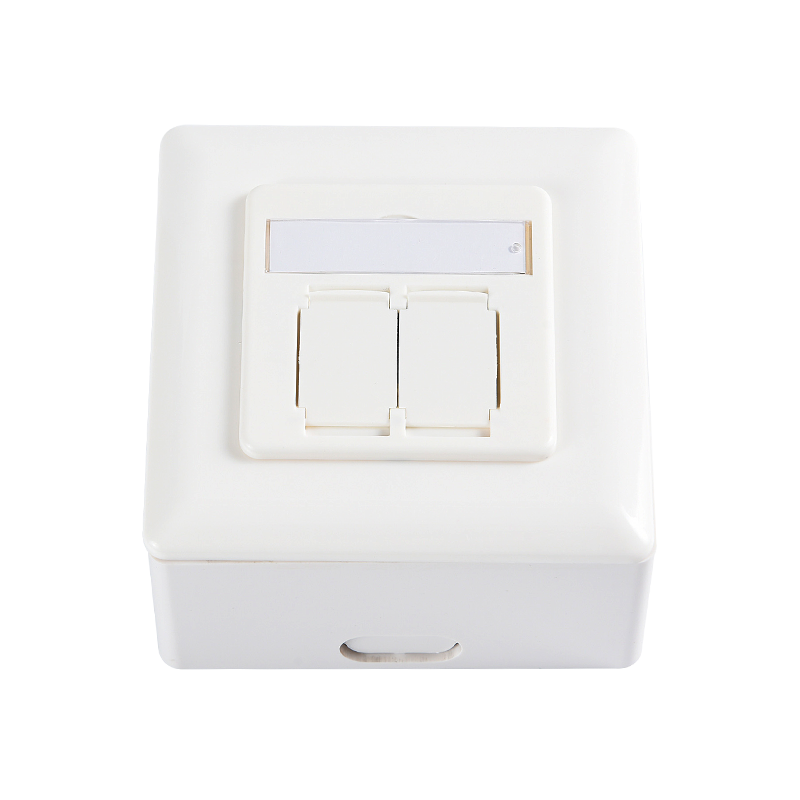
In shallow wall-mount cabinets or open-frame racks where cable management space is limited, angled patch panels orient the ports at 45° or 90° angles relative to the chassis. This design allows patch cords to exit sideways rather than straight back, dramatically reducing the minimum depth required and preventing cable crushing in tight enclosures. Wall-mount patch panels — sometimes called a patch panel box — integrate the patch panel and a small cable management zone into a single self-contained unit, ideal for remote IDF closets, small offices, and home installations.
| Panel Type | Port Count | Max Frequency | Best Use Case | Flexibility |
|---|---|---|---|---|
| Cat6 Fixed | 12 / 24 / 48 | 250 MHz | Office LAN, SMB | Low |
| Cat6A Fixed | 24 / 48 | 500 MHz | Data Center, 10GbE | Low |
| Blank Modular | 12 / 24 / 48 | Up to 500 MHz | Mixed Media, Future-Proof | High |
| Shielded FTP | 8 / 12 / 24 | Up to 500 MHz | Industrial, EMI-heavy | Medium |
| Wall-Mount Box | 8 / 12 / 24 | Up to 500 MHz | Remote IDF, SOHO | Medium |
Keystone Jacks and Faceplates: The Work Area End of the System
While the patch panel anchors the telecommunications room end of the horizontal cabling subsystem, keystone jacks and network face plates serve the work area end. The keystone jack is the modular connector that snaps into faceplates and blank patch panels alike, providing the physical RJ45 interface that end users plug their devices into. Selecting the right keystone jack for your cabling category is just as important as selecting the right patch panel — a Cat5e jack in a Cat6 channel will limit the entire channel to Cat5e performance, regardless of how good the cable and patch panel are.
Professional keystone jack manufacturers produce jacks in both unshielded (UTP) and shielded (FTP) variants, with termination designs that accept 22–26 AWG conductors. The color-coding system (T568A and T568B) is clearly marked on the jack body, allowing for fast and accurate termination — especially important in large-scale deployments where hundreds or thousands of terminations must be made consistently. A net keystone jack for Cat6 applications should meet or exceed the TIA-568-C.2 channel performance specification, including return loss, NEXT, and ELFEXT parameters.
The faceplate rj45 housing matters too. A quality network face plate from reputable faceplate manufacturers provides a secure, flush-mount mounting surface that protects the keystone jack from physical damage, dust ingress, and accidental disconnection. For high-traffic areas, recessed port designs prevent patch cord plugs from being levered sideways under foot or furniture, extending both the port and the patch cord lifespan. Available in standard single-gang (UK/EU) and Keystone (US) formats, modern faceplates accommodate 1 to 6 ports per cover plate.
The bar chart above makes the performance hierarchy immediately clear. A keystone jack cat6 delivers 2.5× the bandwidth of a Cat5e jack — a critical difference when deploying multi-gigabit switches or PoE++ devices that push higher data rates. The jump to Cat6A doubles performance again, unlocking 10 Gigabit Ethernet across the full 100-meter channel. For new installations, Cat6A keying jacks are increasingly the specification of choice, even when current switch ports top out at 1G, because the cabling infrastructure will outlast the active equipment by many years.
An often-overlooked detail is the importance of pairing RJ45 male connector quality with keystone jack quality. A low-grade plug with inconsistent pin dimensions can damage the precision contacts inside a quality keystone jack, permanently degrading that port's performance. Professional installers always specify plug and jack from complementary product lines that have been tested together to verify channel compliance.
Patch Panel Punch-Down: Termination Methods Explained
Patch panel punch down refers to the process of terminating individual copper conductors from a horizontal cable run onto the IDC (Insulation Displacement Connector) terminals on the rear of a patch panel or keystone jack. Unlike traditional screw terminals, IDC termination cuts through the wire insulation and makes contact with the bare copper in a single motion, ensuring consistent, gas-tight connections that resist corrosion over time.
There are three main IDC standards in professional use: the 110-type (the most common in North America and Asia), the Krone-type (dominant in Europe and Australian markets), and the Dual-type which accepts both 110 and Krone punch-down tools interchangeably. Simante patch panels support all three termination types across their product range, ensuring compatibility with whatever tooling is already in an installer's belt.
Correct technique is critical: the cable jacket should be stripped back no more than 13mm (0.5 inches) before termination, and individual conductor pairs should be untwisted no more than 13mm from the termination point. Excessive untwisting introduces crosstalk that can cause a channel to fail NEXT (Near-End Crosstalk) compliance testing even if every other aspect of the installation is perfect. Color-coded termination guides on the rear of quality patch panels make T568A/T568B pair assignment clear and reduce the risk of mis-termination in field conditions.
The line chart above illustrates a pattern seen regularly during large-scale site acceptance testing: when correct termination technique is followed consistently, channel pass rates remain above 96% across installations of 500+ ports. However, when installers allow excessive pair untwisting (often due to time pressure or inadequate supervision), pass rates degrade progressively as port count grows — a problem that is both expensive and disruptive to diagnose and fix after the walls are closed. Using patch panels with color-coded, labeled IDC blocks significantly reduces this error rate in the field.
Network Infrastructure Performance Comparison: Radar Analysis
Choosing the right structured cabling products involves evaluating multiple performance dimensions simultaneously. The radar chart below compares three common deployment tiers — basic Cat5e with fixed patch panels, a mid-tier Cat6 solution using modular blank patch panels and quality keystone jacks, and a high-performance Cat6A fully shielded system — across six critical evaluation axes.
The radar chart reveals the inherent trade-offs in structured cabling tier selection. The Cat5e system scores highest on cost efficiency — making it attractive for budget-constrained retrofits where bandwidth requirements are genuinely modest — but its future-proofing and EMI immunity scores are significantly lower than Cat6 and Cat6A alternatives. The Cat6 modular system with blank patch panels and keystone jacks offers the most balanced profile: competitive bandwidth, good flexibility for media mixing, and strong future-proofing at a moderate cost premium over Cat5e. For greenfield data center builds or demanding enterprise campuses, the Cat6A shielded system dominates on bandwidth and future-proofing, though its higher initial cost and reduced flexibility (compared to modular systems) require careful project planning.
Industry data supports the trend toward Cat6A as the baseline specification for new builds: according to structured cabling market research, Cat6A accounted for over 38% of new enterprise copper cabling ports installed globally in 2023, up from under 15% in 2018 — a growth rate driven by the proliferation of 10GBASE-T switch ports, PoE++ (up to 90W per port), and the anticipation of 25GBASE-T copper applications on the horizon.
RJ45 Connectors: The Termination Interface That Ties It All Together
The RJ45 male connector — more formally known as the 8P8C modular plug — is the universal termination interface of Ethernet networking. Every patch cord begins and ends with an RJ45 plug, and every patch panel RJ45 port, keystone jack, and network faceplate is designed to receive it. Despite its ubiquity, the RJ45 connector is a precision component: its eight spring-loaded contacts must make reliable gas-tight connections with the contacts inside the keystone jack or panel port across thousands of insertion cycles.
Quality rj45 connector manufacturers distinguish their products through contact plating (standard 50µin gold vs. 50µin+ gold for Cat6A), housing material (polycarbonate with or without strain relief boots), and wire management internal geometry. For Cat6A applications, the plug body must be dimensionally larger to accommodate the thicker-jacketed, individually-screened cable pairs — a Cat5e-spec plug body physically cannot accommodate a Cat6A cable, forcing installers to use category-matched components throughout.
In patch panel patches (the short patch cords used inside the rack between patch panel and switch), connector quality is especially critical because these cords are inserted and removed far more frequently than work area patch cords. Rack patch cords in active data centers may be re-terminated dozens or hundreds of times over their service life. Specifying pre-terminated factory patch cords from reputable manufacturers — with 100% electrical testing and controlled manufacturing environments — is a worthwhile investment that prevents intermittent contact failures that are notoriously difficult to diagnose in production networks.
The horizontal bar chart illustrates how data center deployments account for 35% of professional RJ45 connector demand, driven by the high port densities of modern server and storage installations. Enterprise LAN follows at 30%, reflecting the enormous installed base of office buildings, campuses, and educational institutions worldwide. Industrial and PoE applications — powering IP cameras, access control readers, VoIP phones, and wireless access points — represent a fast-growing 15% segment, where connector quality requirements are elevated due to the power-carrying demands of PoE++ (up to 90W per port).
Understanding these market dynamics helps procurement teams recognize why sourcing from established, purpose-built manufacturers matters. A connector designed and tested for data center duty cycles will significantly outlast a budget connector in demanding environments, reducing the lifecycle cost of ownership even if the per-unit price is higher at point of purchase.
About Yuyao Simante Network Communication Equipment Co., Ltd.
Yuyao Simante Network Communication Equipment Co., Ltd. is a professional manufacturer of network cabling solutions and optical fiber products integrating design, development, sales and service. In nearly 20 years of service, we are committed to meeting the needs of our customers through our expertise and providing value to our customers as much as possible from the very beginning of our online communication.
Based on the mature research and development system, the quality stability of Simante has been guaranteed at the design source. We have more than 10 engineers and over 30 full-time technical persons who continue to provide their professional value in the position, improving quality and promoting product update. Our main products include keystone jacks, patch panels, wall face plates, data sockets, and more — widely used in structured cabling, network communication, smart home and automation equipment, and other fields.
The factory operates 10 regular and customization production lines, with fully automatic injection molding machines and semi-automatic units, maintaining a stable annual output of more than 9 million units. Simante supports OEM and ODM projects, and maintains stable export volume across Europe, Australia, Africa, the Middle East, and Southeast Asia. As professional keystone jack manufacturers and patch panel manufacturers, Simante provides specialized integrated solutions for customers to ensure all requirements are fully met. Simante — help you create value together.
Frequently Asked Questions
Q1: What is a patch panel used for in a network?
A patch panel centralizes the termination of horizontal cable runs in a structured cabling system, providing a flexible cross-connection point between permanent cable infrastructure and active network equipment. It simplifies moves, additions, and changes without requiring re-running cables through walls or ceilings.
Q2: What is the difference between a patch panel and a switch?
A patch panel is a passive component — it has no active electronics and simply provides physical connection ports for cable termination. A switch is an active device that processes network traffic and routes data between devices. The two work together: patch panels organize cabling, and switches provide the intelligence to manage data flow.
Q3: How many ports does a standard patch panel have?
The most common configurations are 12-port, 24-port, and 48-port panels, all in 1U rack-mount form factor. A patch panel 24 port is the most widely deployed size in SMB and enterprise IDFs. Higher-density 48-port and 96-port panels are preferred in data center main distribution frames (MDFs) where rack space is at a premium.
Q4: What is a blank patch panel and when should I use it?
A blank patch panel is a chassis without pre-installed ports that accepts snap-in keystone jacks of any category or media type. Use it when you need mixed media (copper + fiber), when you want to standardize on a single chassis while changing connector categories over time, or when custom port layouts are required for a specific application.
Q5: Can a patch panel be used in a car or vehicle?
Standard rack-mount patch panels are designed for fixed IT infrastructure environments. A "patch panel for car" in the automotive audio/video context typically refers to a different product — a signal routing matrix for AV systems. For vehicle networking (CAN bus, Ethernet in-vehicle), specialized ruggedized connectors designed for automotive EMI and vibration environments are required rather than standard structured cabling components.
Q6: How do I choose between Cat6 and Cat6A patch panels?
Choose Cat6 if your current and near-term bandwidth requirements are 1G–5G per port and your budget is a primary constraint. Choose Cat6A if you need 10 Gigabit Ethernet, plan to deploy PoE++ devices, or want maximum future-proofing for a 10–15 year infrastructure lifecycle. For new greenfield construction, Cat6A is increasingly considered the sensible baseline specification given the modest cost premium over Cat6.